


Water Is No Longer Just a Public Service, It Is the Minimum Condition for the Municipal Future
- Editorial

- 3 hours ago
- 4 min read
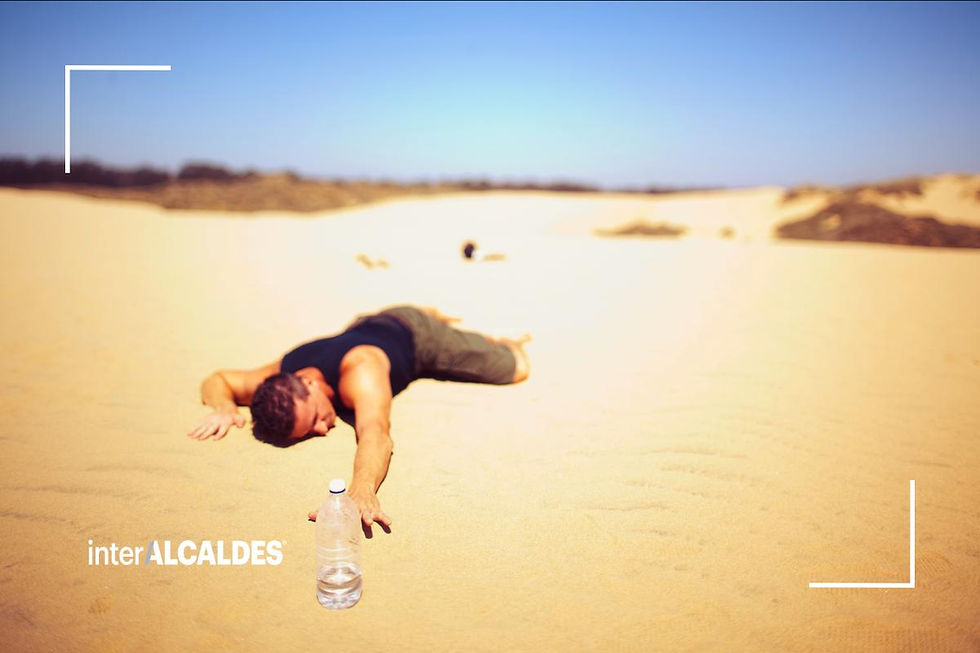
For years, many local governments treated water as an operational service: pipes, bills, water trucks and neighborhood complaints. That reading is no longer enough. Water remains, under Mexico’s constitutional framework, a municipal public service; but in practice it is something more severe: the minimum condition for a city to grow without breaking itself.
A municipality that cannot guarantee sufficient, clean and predictable water will not only face citizen dissatisfaction. It will also lose the ability to attract housing, industry, tourism, employment and public trust. Water scarcity is no longer a technical problem. It is an economic, social and political indicator of municipal viability.
The invisible infrastructure that defines development
Water is the infrastructure that rarely appears in growth speeches, but it sustains every other announcement. Without water, an industrial park is an incomplete promise. Without water, a housing development becomes social conflict. Without functional drainage, public health deteriorates. Without measurable sanitation, municipal modernization becomes cosmetic.
INEGI reported that in 2023 the cost associated with groundwater depletion and surface water degradation in Mexico reached 102.0294 billion pesos, equivalent to 0.32% of GDP. The figure is uncomfortable because it translates the water crisis into economic language: losing water also means losing value, productivity and future capacity.
The same report states that in 2022 Mexico had 623 drinking-water treatment plants, but 17.3% were not operating. It also registered 3,440 municipal wastewater treatment plants, of which only 65.6% were in operation. In municipal terms, this means that a significant part of the country faces not only scarcity, but also an institutional gap in purification, treatment and reuse.
You can listen to this article here:
The new criterion of competitiveness
For years, municipalities competed for investment by offering land, connectivity, fast permits and proximity to logistics corridors. Now they will have to prove water capacity. Nearshoring, vertical housing, medical services, tourism and agribusiness cannot be sustained by speeches about opportunity if the water network is operating at its limit or aquifers are under pressure.
The new territorial competition will no longer be measured only by available hectares, permitting speed or distance to a highway. It will also be measured by verifiable water capacity. For a company, settling without enough water means assuming operational risk; for a developer, selling housing without real availability transfers the conflict to the buyer; for a mayor, authorizing growth without water measurement compromises future governability.
The World Resources Institute warns that by 2050, 31% of global GDP will be exposed to high water stress, and that India, Mexico, Egypt and Turkey will account for more than half of that exposed GDP. This warning places Mexican municipalities before a direct reality: water has entered investment risk.
“A municipality without a water strategy is not managing scarcity: it is mortgaging its economic future.”
That is why every construction license, every industrial park and every new housing development should meet a minimum condition: a public, updated and verifiable municipal water assessment. Water cannot continue appearing after the permit, when the conflict has already reached neighborhoods. It must appear before, as a criterion for planning, investment and political responsibility.

Social Future: when water defines equality
The Social Future category requires looking beyond public works. Water defines equality because it determines who can bathe, cook, study, wash, care for the sick, sustain a small business or live without buying bottled water every day. When service fails, lower-income families pay more: they buy water, store it, adjust schedules, lose time and absorb costs the municipality failed to solve.
UN-Water has placed water at the center of prosperity and peace. That idea has a very concrete municipal translation: where water is missing, social frustration grows; where sanitation does not work, public health deteriorates; where transparency is absent, trust between citizens and government breaks down.
Mexico’s 2024-2030 National Water Plan places four axes on the table that municipalities will have to implement: water sovereignty, justice in access, climate adaptation and transparent integrated management. The challenge is to prevent them from remaining at the federal planning level. They must become local budgets, public indicators, preventive maintenance, leak repair, wastewater reuse and metropolitan coordination.
You can see this article here:
What comes next
The next municipal conversation will no longer be only about how much it costs to bring water to a neighborhood, but which municipalities can prove they have enough water to sustain growth. City councils, water utilities and urban development departments will have to discuss availability before approving expansion; businesses will demand certainty before investing; and citizens will ask for data. Water will move from neighborhood complaint to public condition for authorizing the future.

Govern water before the crisis governs
The municipal economy of the future will depend less on speeches about modernity and more on basic capacity: reliable water, functional drainage and measurable sanitation. The agenda no longer allows economic development to be separated from water management. Whoever separates both is planning cities they will not be able to sustain.
“Water is no longer a campaign promise; today it is the minimum test of government.”
Municipalities that understand this will be able to build a new kind of legitimacy: not the legitimacy of the spectacular announcement, but the legitimacy of service continuity. Those that fail to understand it will be trapped between dissatisfied citizens, cautious investment, pressured aquifers and public works that arrive too late.
The municipal discussion of the coming years will not only be about who promises to bring water to more neighborhoods. It will be about who can demonstrate, with data, investment and public discipline, that their city can grow without taking the future away from its population. Because when water is missing, it is not only a network that fails: the very idea of a viable municipality fails.

Written by: Editorial
Sources
SCJN - Political Constitution of the United Mexican States, Article 115
World Resources Institute - 25 Countries Face Extremely High Water Stress
World Resources Institute - Aqueduct 4.0: Global Water Risk Indicators
UN-Water - United Nations World Water Development Report 2024
OECD - Principles on Water Governance and Implementation Strategy



Comments