


Tijuana and San Diego, The Most Powerful Border in the World and a Key Driver of Nearshoring in Mexico
- Editorial

- Apr 20
- 3 min read


The border between Tijuana and San Diego is not only the busiest in the world. It is the most powerful binational region on the planet and the core of the border economy between Mexico and the United States. Yet Mexico still does not manage it as the global strategic asset it truly represents.
At a time when nearshoring is reshaping global supply chains, the Tijuana–San Diego corridor has become the most efficient connection point between North America and Asia. This region not only explains the industrial growth of northern Mexico, it also reveals why the country has become the leading relocation destination in Latin America. The border is not a limit—it is a platform of power. And today, that power is underutilized.
El corredor Tijuana–San Diego como potencia industrial global
The Tijuana–San Diego corridor as a global industrial powerhouse
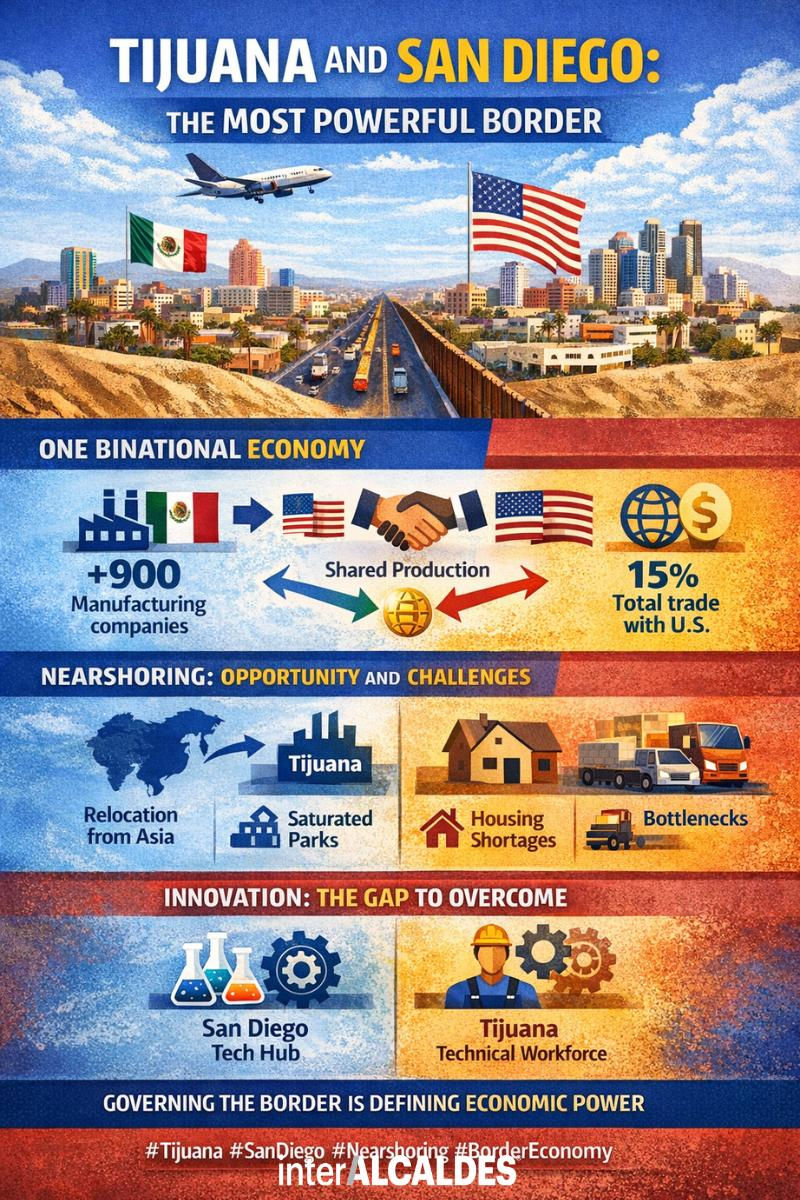
To speak of Tijuana and San Diego is to speak of a single economy divided by a political line. More than 900 advanced manufacturing companies operate in Baja California, integrated into production chains that cross the border multiple times a day. At the same time, San Diego provides capital, innovation, and access to global markets.
This shared production model has been critical in keeping Mexico as the United States’ top trading partner in 2026, accounting for more than 15% of total trade, according to the U.S. Census Bureau. The Tijuana–San Diego border does not just move goods—it orchestrates entire industries.
But the critical issue lies elsewhere. While the United States strengthens its border infrastructure and smart logistics, Mexico continues to operate with a fragmented vision across levels of government. The country’s most dynamic region is functioning… without a comprehensive strategy.
"Whoever governs the border governs the flow of economic power.".
You can listen to this article here:
Innovation and talent, the gap that defines value at the border
San Diego is one of the most dynamic innovation hubs in the world, driven by institutions such as University of California San Diego, where biotechnology, artificial intelligence, and applied sciences converge. Tijuana, on the other hand, has built a strong technical base but still faces challenges in scaling toward high-value research.
This is where the true competitive advantage of the Mexico–U.S. border region is defined. According to the OECD, economies that integrate manufacturing with innovation can increase value added per worker by up to 40%.
“Mexico has talent. What is missing is strategic integration.”.
Tijuana does not compete with San Diego. Tijuana is part of San Diego. And until that integration translates into public policy, Mexico will continue capturing volume—but not technological leadership.
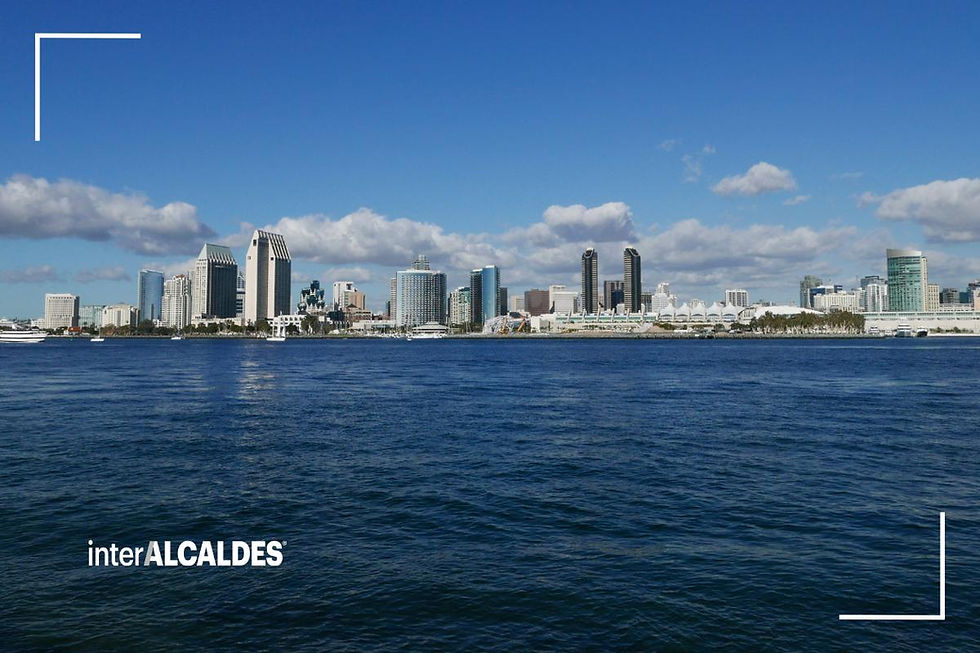
Nearshoring at the Mexico–United States border, growth under pressure
The rise of nearshoring has placed Mexico at the center of the global economic landscape. Companies from China, South Korea, and Japan are relocating operations closer to the U.S. market. And the natural entry point is Tijuana.
However, growth is beginning to strain the city’s limits. Industrial parks are reaching capacity, urban services are under pressure, housing shortages are increasing, and logistical bottlenecks are slowing expansion potential.
The Inter-American Development Bank estimates that Mexico could capture up to $78 billion in additional exports if it resolves its infrastructure constraints. The figure is compelling. So is the risk. Nearshoring does not pass through the border. It is built on it. And today, that construction is moving faster than planning.
You can see this article here:
The most powerful border in the world as a geopolitical asset
In a global environment shaped by trade tensions and supply chain reconfiguration, the Tijuana–San Diego border stands out as a strategic geopolitical node. North America, Asia, and Latin America converge here in real time.
Yet the region lacks strong binational governance at the local level. There is no structured agenda among authorities to align economic development, innovation, sustainability, and infrastructure. This is the most costly omission.
While cities like Shenzhen and Rotterdam have established integrated regional planning models, the most powerful border in the world still depends on federal decisions that do not always reflect its real dynamics. The future will not wait.
Mexico does not need to build a new competitive advantage. It already has one in the Tijuana–San Diego border. What is missing is turning that advantage into a national strategy.
If the country succeeds in consolidating this region as an integrated ecosystem of manufacturing, innovation, and logistics, it will not only increase its competitiveness—it will redefine its role in the global economy. Because at this border, goods are not the only things crossing. Economic power is being shaped.
At interAlcaldes, this analysis connects with other key trends such as the growth of nearshoring across different regions of Mexico and the transformation of municipalities into strategic nodes of the global economy. Understanding the border is understanding where Mexico is headed.
Is Mexico ready to truly lead the most powerful border in the world: Tijuana and San Diego?

Written by: Editorial


Comments