


The Municipal Challenge of Managing Industrial Growth
- Editorial

- 20 hours ago
- 5 min read

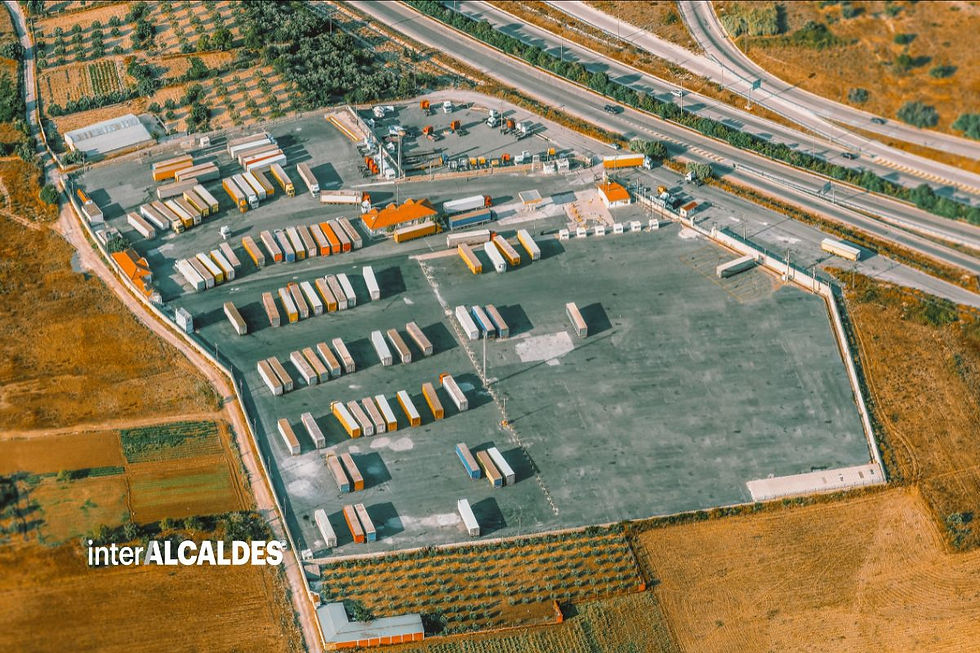
Industrial investment can transform a city's economy. But when factories, industrial parks and logistics centers expand faster than infrastructure, economic success can quickly become a governance problem.
A factory can arrive before the city is ready
A municipality can win a factory and, at the same time, begin to lose control of its growth.
Industrial investment is usually announced through capital figures, job creation and square footage. That makes sense: new plants generate economic activity, suppliers, exports and employment opportunities. Yet behind every industrial park lies another equation that rarely makes the headlines. More workers require housing. More production demands water and energy. More freight means heavier traffic. And a more intensive economy places additional pressure on roads, transportation, public safety, drainage and municipal services.
In 2024, manufacturing industries received approximately US$18.116 billion in foreign direct investment in Mexico, making manufacturing the leading recipient sector reported by Data México.
The relevant question for local governments is therefore no longer simply how much investment they can attract. It is how much growth their territory can absorb without deteriorating.
“A factory can be built in months; a city needs years to prepare the territory that will make it sustainable.”
You can listen to this article here:
Territory is the first industrial policy
The problem begins when investment moves faster than planning.
Mexican municipalities have significant authority over urban development, zoning and land use, and municipal planning instruments determine where cities can expand and under what conditions. Cámara de Diputados Yet much of the country is entering a new industrial cycle with insufficient or outdated territorial-planning tools.
Mexico's 2025–2030 Sectoral Program for Agrarian, Territorial and Urban Development states that of the country's 2,478 municipalities, only 760 have an officially published or registered Municipal Territorial and Urban Development Program. Sixty percent of those programs were prepared more than a decade ago.
That institutional gap matters. A land-use decision made today may determine mobility patterns, housing availability, public-service capacity and the cost of urban expansion for decades.
Attracting industry without first organizing the territory does not eliminate these problems. It merely postpones them.
The costs appear outside the industrial park
A plant may be privately owned. Its territorial impacts are not.
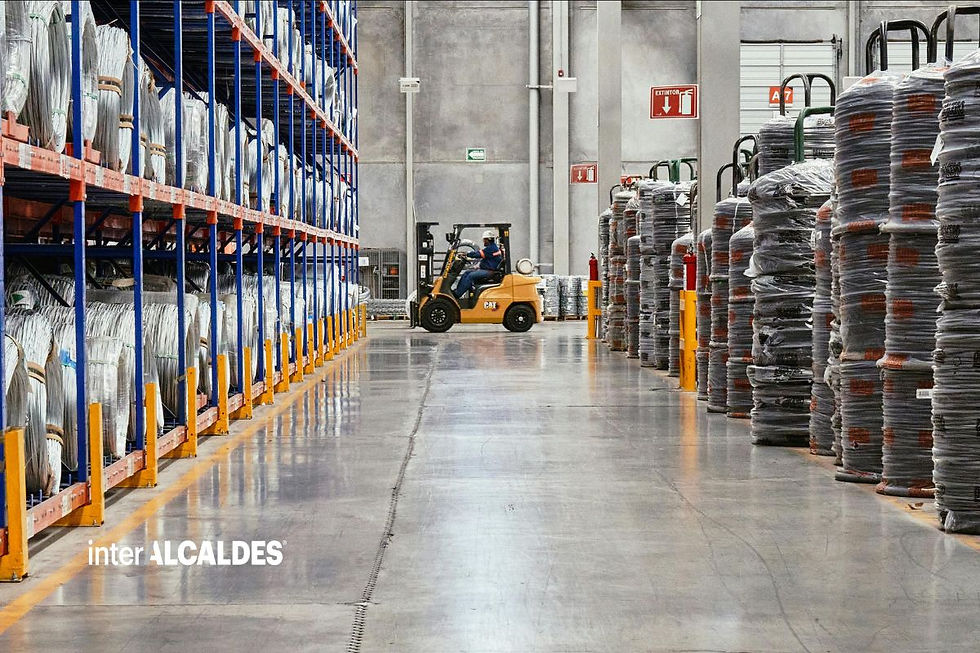
Trucks eventually travel on public roads. Employees must commute every day. Housing demand changes land markets. Population growth increases requirements for water, sewage, transportation, public safety and waste collection.
Water is among the most evident constraints. Mexico's National Water Commission maintains official groundwater-availability data precisely because productive and urban expansion cannot be separated from the hydrological capacity of a territory.
Approving a new industrial district should therefore not be understood merely as a real-estate authorization. It is effectively a decision about how the future city will operate.
That leads to a more uncomfortable question: who pays for growth?
If new industrial development ultimately requires wider roads, expanded water networks, drainage, transportation or public facilities, but all of that infrastructure must later be financed exclusively through municipal budgets, local government may end up absorbing a substantial share of the territorial cost of economic expansion.
Industrial governance also means anticipating that bill and determining how developers, landowners, companies and different levels of government will participate in financing the infrastructure required to sustain growth.
Jalisco, when industry crosses municipal boundaries
Jalisco illustrates the scale of the challenge.
The state government has projected approximately US$625 million in investment to build around 800,000 square meters of industrial parks.
But those 800,000 square meters do not end at the walls of an industrial complex.
Employees may live in one municipality and work in another. Suppliers travel through metropolitan corridors. Freight crosses several jurisdictions before reaching national highways. New housing demand may spread far beyond the municipality where the original investment takes place.
This reveals one of the most important consequences of the current industrial cycle: its impacts are municipal, but its operation is increasingly metropolitan and regional.
A city hall may authorize development inside its boundaries, but it cannot independently solve all of the resulting mobility, housing, water and infrastructure pressures.
Intermunicipal coordination therefore stops being merely an administrative best practice and becomes an economic necessity.
You can see this article here:
Chandler: treating industry as an urban system
Chandler, Arizona, provides a useful comparison on the other side of the North American economic relationship.
The city has developed a high-tech manufacturing ecosystem of more than 300 companies employing nearly 28,000 workers, with manufacturing accounting for approximately 20% of local jobs.
The more important lesson, however, is not the scale of those numbers.
When Chandler describes its relationship with the semiconductor industry, it places infrastructure improvements, water and wastewater treatment, development processes, workforce development and public safety within the same system required to support industrial activity.
That approach changes the conversation.
A factory is no longer treated as an isolated parcel waiting for permits. It becomes one component of an urban system that must function as a whole.
For Mexican municipalities, this may be one of the most relevant lessons: the goal is not simply to facilitate investment, but to build the territorial conditions required to sustain it.

From attracting companies to governing growth
For decades, municipal economic success could be measured through companies established, jobs created or investment announcements. The new industrial cycle demands a more sophisticated measure.
Municipalities must ask where growth should take place, how much water is available, where workers will live, how they will reach their jobs, which roads will absorb freight traffic, which infrastructure must be expanded and who will help finance it.
That requires updated urban plans, protected territorial reserves, better connections between employment and housing, infrastructure planning before development occurs and metropolitan mechanisms capable of governing economic processes that no longer respect administrative boundaries.
“Industrial success is not measured by how many factories arrive, but by how much growth a city can absorb without deteriorating.”
Mexico faces an extraordinary industrial opportunity. Yet investment that creates employment while producing congestion, disorderly expansion, water pressure and inadequate public services ultimately transfers part of its cost to the community.
Attracting investment is economic policy.
Managing everything that comes afterward is governance.
Are Mexican municipalities preparing their territories for the industries they want to attract, or are we still celebrating investments whose real urban bill will only become visible ten years from now?

Written by: Editorial
Sources
Mexico's Secretariat of Economy — Data México. Foreign direct investment by economic sector in Mexico. Data México. Economía
SEDATU — Sectoral Program for Agrarian, Territorial and Urban Development 2025–2030. Assessment of municipal and metropolitan territorial-planning instruments. Official document. SEDATU
Mexican Chamber of Deputies — General Law on Human Settlements, Territorial Planning and Urban Development. Legal framework governing municipal urban planning and development. Official legislation. Cámara de Diputados
CONAGUA — Average Annual Groundwater Availability. Official platform providing groundwater-availability information. Official platform. Sigagis
Government of Jalisco. Projected US$625 million investment for approximately 800,000 square meters of industrial-park development. Official source. Gobierno de Jalisco
City of Chandler, Arizona. American Investment in Semiconductor Manufacturing Spotlights Intel in Chandler. Information on high-tech manufacturing, infrastructure, water, urban development and workforce development. Official source.


Comments