


State 33. The Mexican Diaspora Enters the Humanist Revolution from the National Museum of Anthropology
- Editorial

- May 13
- 3 min read
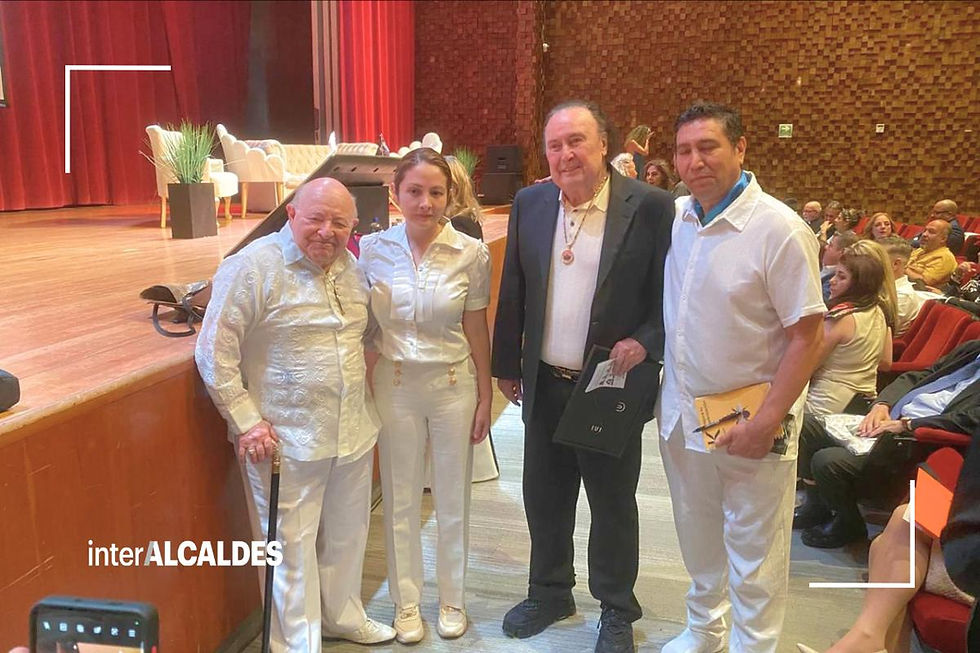
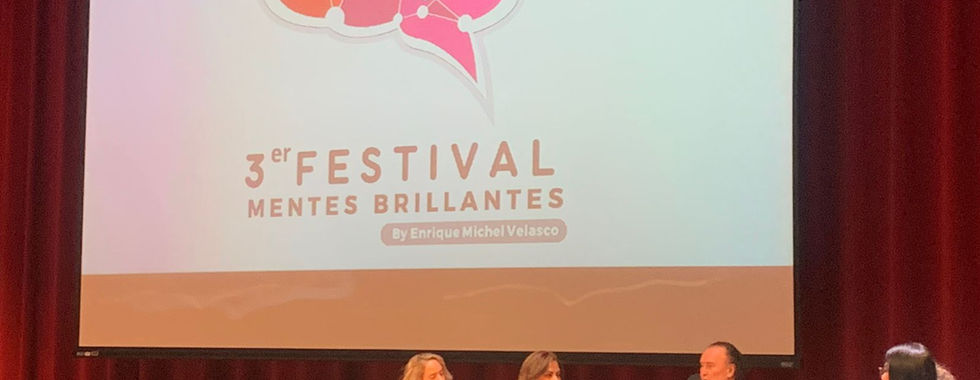
The 3rd Brilliant Minds Festival By Enrique Michel Velasco 2026 opened a cultural, humanist and binational agenda to rethink Mexico’s relationship with its migrant communities.
Mexico does not end at its border. It also lives in every migrant community that preserves its language, its culture, its symbols and its family memory far from the national territory.
That was one of the central ideas that marked the 3rd Brilliant Minds Festival By Enrique Michel Velasco 2026, held at the National Museum of Anthropology, where more than 20 speakers, creators, social leaders and agents of change gathered to promote an agenda based on the so-called Humanist Revolution: a proposal that seeks to awaken social consciousness, critical thinking and collective action through culture, art, spirituality, philanthropy and social leadership.
The gathering was not just a forum of ideas. It was a political and cultural signal. In a country where public conversation often focuses on security, the economy, elections or migration, the festival placed a deeper question on the table: what kind of humanity does Mexico want to build inside and beyond its borders?




State 33. A Narrative to Organize Belonging
One of the most relevant moments of the festival was the presentation of the initiative to create the State 33 of the Mexican Diaspora, a project that seeks to strengthen the binational unity of Mexican communities abroad through culture, humanism and national identity.
The proposal will be led by writer Guadalupe Loaeza and by its founder Marco Tardelli, who officially presented the coat of arms and anthem of State 33, composed by symphonic creator Venus Rey Jr., based on his work 5 de Mayo. The popular song Inmigrante, performed by Edgardo Eliezer, was also launched.
But the value of State 33 is not only found in its symbols. It lies in its potential to open a new way of understanding the Mexican diaspora.
You can listen to this article here:
For years, Mexico has viewed its migrants through absence: those who left, those who send remittances, those who support families from afar. But that view is no longer enough. The diaspora is also identity, economy, knowledge, investment, culture, public influence and binational power.
For interAlcaldes, State 33 can become a strategic platform to connect Mexican municipalities with their migrant communities in the United States, Canada and other regions of the world. It is not only about nostalgia. It is about building useful networks for local development, municipal cultural diplomacy and Mexico’s international projection.

The Border as a Cultural Stage
As part of the agreements generated during the festival, binational impact initiatives were announced, including a fashion show in the border area between Tijuana and San Diego, led by designer Ricardo Seco, who will develop a collection inspired by State 33.
The creation of “Virgin of the Wall” was also proposed, a 15-meter monumental sculpture commissioned to sculptor Sigifredo Islas, planned to be installed at the point where the border wall begins in the sea between both cities.
You can watch this article here:
These actions would be part of a first migrant prevention initiative promoted by State 33. The issue requires sensitivity. Talking about migrant prevention cannot be reduced to asking people not to cross. It must open a broader conversation about rootedness, local opportunities, security, employment, education and dignity.
Because no wall can explain migration by itself. Migration is also born when a municipality stops offering a future.
A Humanist Agenda with Global Reach
The festival brought together voices from different fields, including Larry Rubin, president of the American Society of Mexico; Arturo Morell, president of Un Grito de Libertad; international artist Michel Mirabal; Diego Prieto Hernández, former director of the National Institute of Anthropology; and producer Carla Estrada.
Profiles linked to inclusion, peace and social transformation also participated, such as Liliana Sánchez, who shared her experience promoting sports yoga as a tool against bullying; actor and activist Valentino Lanús; and theologian José de Jesús Aguilar Valdés.

As a closing moment, Universidad Santander granted businessman Michel Domit the investiture as Ambassador of the Humanist Revolution. Domit shared a collective meditation based on his Renäser movement, an initiative that will be promoted by FHC International across the five continents through retreats, forums and holistic activities.
The 3rd Brilliant Minds Festival By Enrique Michel Velasco 2026 confirms that culture can be more than celebration. It can become public agenda. It can build bridges between territories. It can give language to communities that have been seen for too long only as migration statistics.
The Mexican diaspora is not a territorial absence. It is a political, cultural and economic extension of Mexico.
The question is whether the country, its local governments and its institutions are ready to recognize it, organize it and turn it into an active part of its future.

Written by: Editorial


Comments