


Guadalajara Before the World. What a Mexican City Can Gain or Lose in 30 Days
- Editorial

- Jun 4
- 3 min read

The World Cup can project Guadalajara as a global city, but it can also expose its metropolitan challenges.
Guadalajara will not only host matches during the 2026 World Cup. It will receive an uncomfortable opportunity: to prove whether it can behave like a global city without losing its local identity.
The capital of Jalisco enters the tournament with clear advantages. It has cultural brand power, an international airport, gastronomy, creative industries, proximity to Zapopan and a powerful narrative linked to mariachi, tequila, innovation and sports. But it also arrives with familiar challenges: metropolitan mobility, security, urban inequality and pressure on public services.
In a tournament with 48 teams, 104 matches and 16 host cities, Guadalajara is not competing only with Mexico City and Monterrey. It is competing for global attention with Los Angeles, Toronto, Miami, Vancouver, Dallas, New York and Seattle. That comparison should not intimidate it. It should force it to think better.
"A global city is not the one that appears on the map; it is the one that knows what to do when the world is watching."
You can listen to this article here:
The showcase and the risk
The World Cup can project Guadalajara as a Mexican city with its own identity. It is not just another host city. It is an entry point to Jalisco and to a regional economy that combines culture, technology, agribusiness, tourism and services.
But international exposure also amplifies mistakes. A poor mobility experience, a neglected urban core, a perception of insecurity or weak communication can travel faster than any promotional campaign.
A city's reputation is built over years and can be damaged in minutes. In the context of the World Cup, every visitor will also be a media outlet: posting, recommending, criticizing or returning.
The global lesson
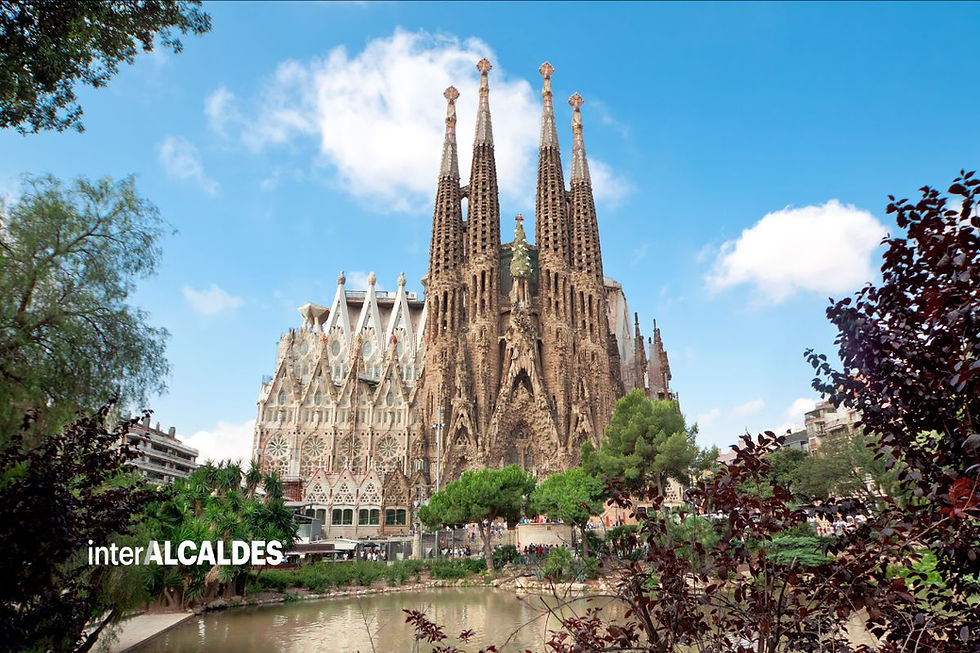
Barcelona understood that a global event can reposition a city. Medellin understood that urban transformation can change an international narrative. Bilbao understood that culture and infrastructure can alter the economic perception of a territory.
Guadalajara does not need to copy those models. It needs to find its own synthesis: Mexican culture, technology, urban life, creative industry and metropolitan coordination. Its advantage is not in resembling other cities. It is in organizing what already makes it different.
The question is not whether Guadalajara has identity. It does. The question is whether it can turn that identity into an orderly, safe and memorable urban experience.

What this means for municipalities
Guadalajara cannot act alone. The World Cup experience will be metropolitan. Many visitors will move between Guadalajara, Zapopan, Tlaquepaque and other points in the metropolitan area. That makes inter-municipal coordination a basic condition for success.
For mayors, the challenge will be to align mobility, security, tourism, commerce, culture and communication. Scattered cultural events are not enough. A shared narrative is needed: what city do we want to show, which routes do we want to promote, which neighborhoods do we want to activate and which services must be reinforced.
The World Cup can also be an opportunity for small businesses, restaurants, boutique hotels, galleries, markets and local producers. But that requires a connection between public policy and neighborhood economies.
"A city brand is not designed in a logo; it is confirmed in the experience of walking through it."
You can see this article here:
What remains unresolved
The main pending task is to turn World Cup preparation into metropolitan legacy. If improvements are limited to areas near the stadium or to tourism corridors, the impact will be limited.

A more aggressive strategy for local economic integration is also missing. Guadalajara can show culture, but it must avoid allowing economic benefits to concentrate among a few actors. The city needs to open space for producers, entrepreneurs, artists, guides and community businesses.
Mobility is another critical point. A city that wants global projection cannot depend on improvised solutions to move visitors and residents during high-pressure days.
Guadalajara has what it needs to win in 2026. But winning does not mean appearing on television. It means making visitors understand why this city matters to Mexico.
The World Cup should not be a postcard. It should be a city test. Is Guadalajara ready to turn global attention into lasting reputation?

Written by: Editorial
Sources Consulted
FIFA, host cities and 2026 World Cup schedule.
Government of Jalisco and municipal governments of the Guadalajara metropolitan area.
UN-Habitat, analysis on metropolitan areas.
International cases: Barcelona, Medellin and Bilbao.
Mexico Ministry of Tourism, public information on tourism promotion.
interAlcaldes editorial analysis.


Comments