


Global Municipalities, The New Economic War Is Being Fought Between America and Asia
- Editorial

- Feb 20
- 4 min read
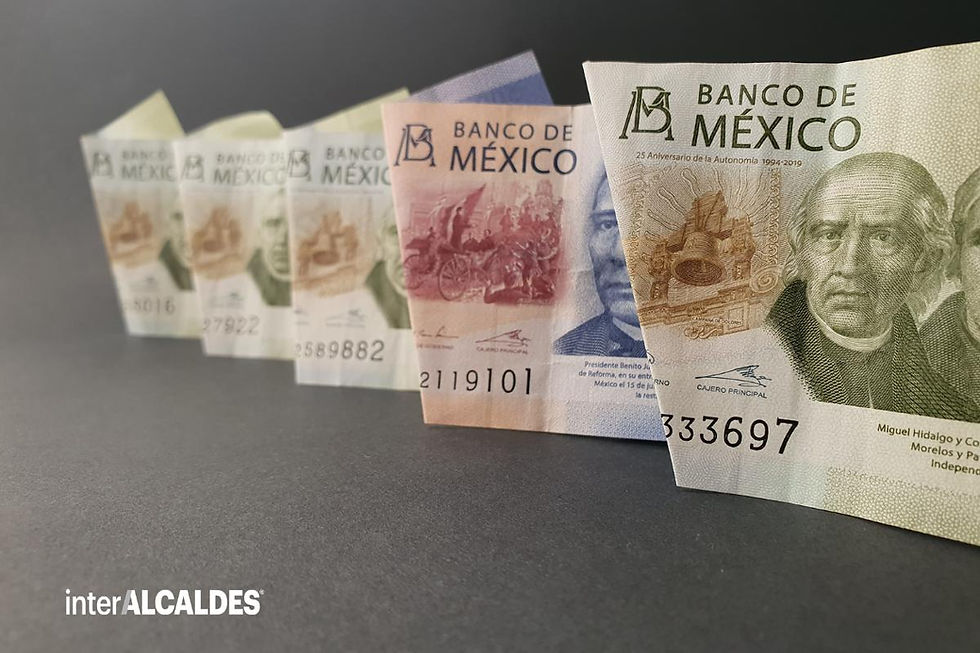
In 2026, economic competition is no longer decided exclusively at presidential summits or through trade agreements. It is increasingly shifting to the municipal level, where local governments are learning to innovate “in networks” to attract investment, raise productivity, and solve public service challenges through technology. This dynamic is known as open innovation networks: practical agreements among cities to share data, procurement models, public challenges for startups, civic labs, university technology transfer, and cooperation with the private sector. What is new is that these networks are no longer confined to the transatlantic axis. They are now stretching forcefully between municipalities in the Americas and Asia, with extensions into Europe and Africa, and with Mexico playing a pivotal role due to its deep integration with the United States.
The incentive is clear. North American trade and production are being reorganized, and Mexican cities—especially border, industrial, and logistics hubs—are capturing part of this realignment. In 2025, Mexico recorded record exports to the United States of 534.9 billion dollars, a 5.8 percent increase over 2024, while total bilateral trade reached 872.8 billion dollars. This momentum forces municipalities to compete on two fronts simultaneously: meeting North American standards in supply chains, traceability, rules of origin, and cybersecurity, while also incorporating Asian capabilities in advanced manufacturing, urban digitalization, and technological scaling.

The data from 2025 explain why open innovation has become a necessity rather than a luxury. According to official statistics, Mexico’s total exports grew 14.2 percent year over year, with non-oil exports to the United States rising 17.1 percent and exports to the rest of the world increasing 12.3 percent. At the same time, trade patterns with Asia reveal the urgency of moving up the value chain. In November 2025 alone, Mexico exported 958 million dollars to China while importing 10.7 billion dollars, generating a monthly deficit of nearly 9.8 billion dollars. At the municipal level, this imbalance translates into a strategic imperative: if cities fail to convert technological imports into local capabilities—engineering, software development, automation, and new materials—the trade deficit becomes a dependency deficit.
This is where intermunicipal networks between the Americas and Asia come into play. Asia contributes speed of adoption, industrial density, and platforms for applied innovation. The Americas—and Mexico in particular, given its proximity to the United States—contribute integrated demand, preferential access to North American markets, and logistical urgency. The bridge between both regions is built through concrete instruments: innovation challenges for public services such as mobility, water management, public safety, and energy efficiency; startup-oriented public procurement; regulatory sandboxes; data interoperability; and alliances with universities to turn pilot projects into scalable public policies. By 2026, the dominant narrative is no longer “smart cities” as marketing, but “cities as platforms,” measured by performance indicators and economic returns.

Technology has become the common language. A revealing indicator from 2025 comes from international assessments of urban artificial intelligence initiatives, which identified projects in more than 70 cities worldwide. Roughly two-thirds of these initiatives focused on improving governance and urban services, including internal municipal management, digital service delivery, and support for regulatory and safety functions. This explains why open innovation networks have become a new arena of competition. Artificial intelligence applied to permits, inspections, infrastructure maintenance, and water management reduces costs, speeds up processes, and increases certainty for investors. When cities share how these systems are designed, procured, and evaluated, the learning curve shortens dramatically.
Europe and Africa enter this equation as partners in standard-setting and resilience. European urban cooperation programs emphasize sustainability, innovation, and regulatory alignment, offering valuable frameworks for Mexican municipalities seeking climate finance, clean mobility, and metropolitan planning compatible with international norms. African cities, meanwhile, are emerging as laboratories for frugal, high-impact solutions in basic services and local economic development, increasingly connected through triangular cooperation among Latin America, Africa, and Asia. In 2026, the cities that succeed are not those with the most technology on display, but those capable of delivering replicable results and building ecosystems around real problems.
The political dimension is unavoidable. Trade policy is becoming more restrictive, and Mexico has taken steps to tighten measures on certain Asian imports without free trade agreements, signaling that industrial policy will remain a central issue throughout 2026. This creates a tension between the need for technological cooperation with Asia and the desire to correct structural trade imbalances. Open innovation networks offer a pragmatic solution. Rather than relying on finished imports, municipalities can promote technology transfer, local training, and co-investment, increasing regional content and skilled employment without severing strategic ties.

The main challenge for 2026 is turning enthusiasm into institutional architecture. Governance remains a weak point, as many cities still lack technical offices capable of designing innovation challenges, evaluating pilots, and scaling digital procurement transparently. Data governance is another barrier; without standards, interoperability, and cybersecurity at the municipal level, urban artificial intelligence remains fragile. Financing is equally critical, since innovation requires resources to prototype, measure impact, and sustain operations. Subnational diplomacy must also mature, enabling Mexican cities to cooperate with counterparts in America, Asia, Europe, and Africa without clashing with federal priorities or the broader Mexico–United States relationship. Finally, talent is the ultimate bottleneck. In 2026, the scarcity will not be ideas, but engineers, innovation managers, and specialists in digital public procurement.
If Mexico aims to make 2026 the year in which cities become true engines of competitiveness, these networks must be treated as strategic infrastructure, as essential as ports or highways. The new geopolitics—the one that directly affects jobs, investment, and productivity—is already being written from the municipal level.

Written by: Editorial


Comments