


Artificial Intelligence Reaches Data-Ready Municipalities First
- Editorial
- 3 days ago
- 4 min read
Updated: 2 days ago


The next territorial divide will not separate municipalities that have artificial intelligence from those that do not. It will separate governments capable of turning public information into better decisions from those that cannot.
Artificial intelligence will not reach the wealthiest municipalities first. It will reach those that know what data they hold, who updates it and which decisions it can support. Buying a platform is relatively easy; building reliable information requires administrative continuity, trained personnel and institutional discipline that survives changes in government.
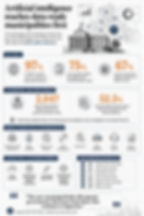
In June 2026, the OECD reported that artificial intelligence was already being used in at least one government function in 97% of its member countries. Yet 75% did not evaluate whether their digital and AI investments delivered the expected results. Adoption is advancing faster than the capacity to govern it.
“A municipality without reliable data is not buying intelligence; it is buying a faster version of its own disorder.” — interAlcaldes
You can listen to this article here:
Without data, artificial intelligence accelerates errors
An algorithm can help detect water leaks, organize citizen requests, identify revenue anomalies or prioritize maintenance. But it first needs updated property records, standardized addresses, verifiable histories and systems capable of exchanging information.
When those records are incomplete or scattered across isolated departments, technology reproduces administrative failures at greater speed. Municipal AI infrastructure does not begin in a data center. It begins at the service desk that records an address correctly, in the office that updates a permit and with the public employee who documents a decision.
Mexico’s challenge is visible in a basic government function. The 2025 National Census of Municipal Governments and Mexico City Boroughs reported that, during 2024, 2,047 public administrations offered property tax payment services and that nationwide revenue averaged 52.5% of the amount planned. Improving cadastral information and analyzing noncompliance is not merely technological modernization; it is financial capacity to sustain public services.

Economic advantage is built in public records
The OECD states that 67% of its countries use artificial intelligence to improve public-service design and delivery through automation, resource allocation and decision support.
At the municipal level, it can shorten processing times, guide inspections, prevent infrastructure failures, improve waste-collection routes and identify patterns of tax evasion or resource loss. It can also provide greater certainty to companies that depend on permits, land-use decisions and reliable services before investing.
The advantage will not come from displaying the most impressive chatbot. It will come from knowing how long a permit takes, where leaks are concentrated and which public assets are deteriorating before they become a budget emergency. A municipality that learns from its data can spend more effectively; one that does not understand it will continue paying the cost of reacting too late.
When an algorithm decides, someone may be left out
Artificial intelligence can also deepen inequality. A system trained on incomplete files may overlook informal settlements, rural communities, older adults, residents without connectivity or citizens whose administrative records contain errors.
That is why a Social Future perspective must look beyond efficiency. Automation may save time, but it can also close a door to someone who lacks digitized documents or technological skills. When a tool influences benefits, inspections, taxes or access to services, human oversight, a correction mechanism and a clear explanation of its criteria must remain available.
The U.S. National Institute of Standards and Technology’s AI Risk Management Framework argues that trustworthiness should be incorporated throughout the design, development, use and evaluation of systems. The question is not only whether a tool works, but whom it works for, who is accountable for errors and how a decision can be challenged.
You can see this article here:
Transparency is also infrastructure
Helsinki maintains a public register of its AI systems, allowing residents to understand their uses and submit feedback. Amsterdam publishes municipal algorithms and privacy or impact assessments when applicable. Buenos Aires uses Boti, its WhatsApp channel launched in 2019, for procedures and inquiries; since 2024, it has incorporated generative AI into selected service experiences.
These cities show that innovation also requires documentation, explanation and public oversight. Technology gains legitimacy when citizens know it exists, understand its purpose and retain the right to question it.
“The new municipal divide will separate governments that learn from those that continue to improvise.” — interAlcaldes
Mexico needs prepared governments, not futuristic municipalities
The World Bank assesses GovTech maturity through four dimensions: core government systems, digital public-service delivery, citizen engagement and enabling conditions. The lesson is direct: no isolated solution can replace interoperability, clear rules, in-house talent and institutional continuity.
Mexican municipalities do not need to begin with complex predictive models. They must identify their information, assign responsibility, standardize records, protect personal data, digitize priority processes and measure results. Only then can they determine where artificial intelligence creates real public value and where it merely adds cost, technological dependence or risk.
The next form of territorial inequality will emerge between governments capable of anticipating needs and those that respond only after a problem has become a crisis. Artificial intelligence will not decide what kind of city should be built; it will make it easier to see who governs with evidence and who still administers through intuition.
Is your municipality preparing the data, rules and talent that artificial intelligence requires, or is it trying to automate problems it has not yet understood?

Written by: Editorial
Sources Consulted
OECD — Governing with Artificial Intelligence: AI in Public Service Design and Delivery
INEGI — 2025 National Census of Municipal Governments and Mexico City Boroughs
SNIEG — Results of the 2025 National Census of Municipal Governments
City of Buenos Aires — Boti Evolves with Generative Artificial Intelligence