


North America reborn, Jalisco and the Border States lead the new industrial era
- Editorial

- Apr 28, 2025
- 3 min read

In 2025, North America is experiencing an industrial renaissance that would have seemed unlikely just a decade ago. Driven by the nearshoring phenomenon, the region has reshaped its economic landscape, positioning Mexico as a strategic player in the reindustrialization of the United States and Canada. Within this dynamic, Mexico’s border states—Baja California, Sonora, Chihuahua, Coahuila, Nuevo León, and Tamaulipas—along with Jalisco, the technological gateway of western Mexico, have become key engines of this new growth cycle.
Throughout 2024, the border states captured 53% of the Foreign Direct Investment (FDI) that entered Mexico in the manufacturing sector, according to data from the Ministry of Economy. Nuevo León led the process, attracting a record investment of over 9.6 billion dollars, followed by Chihuahua and Coahuila with inflows exceeding 5 billion dollars each. Meanwhile, Jalisco broke paradigms by becoming the first non-border state to dominate nearshoring trends, attracting 4.2 billion dollars in new industrial projects, primarily in high-tech sectors such as semiconductors, advanced manufacturing, and electronic components, as reported by the Council of Industrial Chambers of Jalisco (CCIJ) and the Inter-American Development Bank (IDB).
Jalisco’s strategy has been twofold: on one hand, it has consolidated its innovation ecosystem around the Guadalajara metropolitan area, where manufacturing employment grew by 18% in 2024 compared to 2023; on the other, it has developed new industrial corridors across the state, especially in municipalities like El Salto, Tepatitlán, and Lagos de Moreno, which collectively reported a 22% increase in new manufacturing plant openings. This model of "smart nearshoring" has allowed Jalisco to diversify beyond traditional assembly operations, focusing on high-value-added manufacturing.
At the same time, the border states have not only strengthened their logistics infrastructure to attract investment but also deepened their integration with U.S. markets. In 2024, the volume of manufacturing exports from Mexico’s northern border grew by 11% year-over-year, according to figures from the U.S. Census Bureau and Mexico’s Ministry of Economy. This dynamism was accompanied by a 17% increase in applications for the construction of new certified industrial parks, highlighting both the growing pressure on available infrastructure and the urgent need to expand logistics and energy capacities.

The nearshoring phenomenon has also led to significant labor transformations. According to Mexico’s Social Security Institute (IMSS), formal employment in the manufacturing sector grew by 7.8% in the border states during 2024, while Jalisco experienced a 9.3% increase, particularly in technical and engineering roles. This confirms that the relocation of supply chains is not just an investment opportunity but also a driver of social development and upward economic mobility.
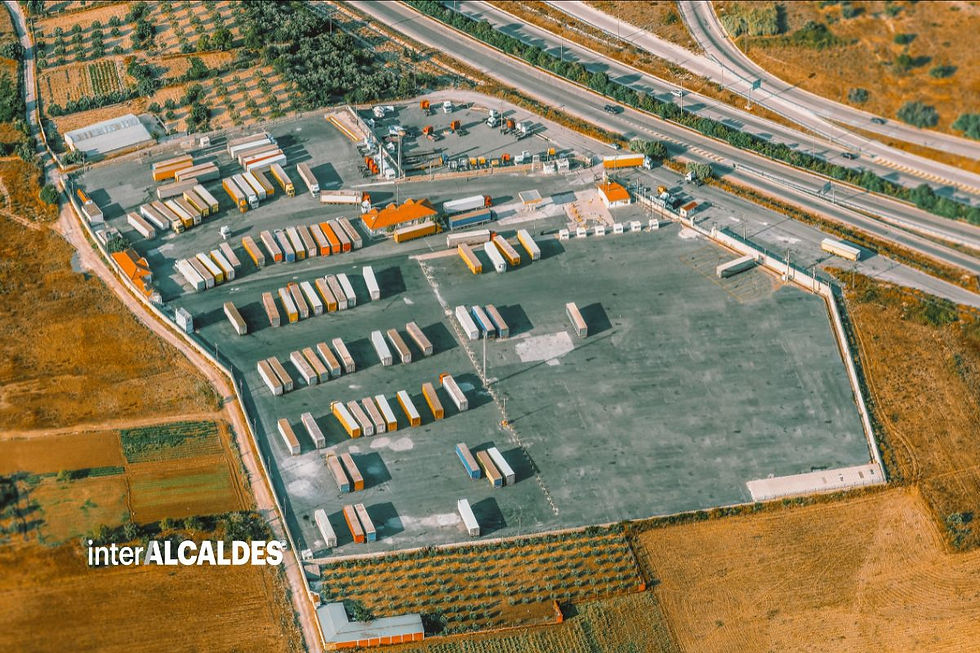
However, the challenges for 2025 are as significant as the opportunities. One major risk is the saturation of logistics infrastructure along the northern border, where crossings such as Laredo, Otay, and Nogales already report wait times exceeding optimal levels by 25%, according to the North American Development Bank (NADB). Without decisive investment in customs modernization, highway expansion, and enhanced security on transport routes, the nearshoring potential could be severely constrained.
Meanwhile, Jalisco faces the challenge of consolidating its advanced manufacturing model without falling into disorganized growth. To succeed, the state must strengthen its strategies for talent development, sustainable energy infrastructure, and the provision of quality public services in emerging industrial zones. Universities such as Tecnológico de Monterrey, ITESO, and the University of Guadalajara have begun adapting their programs to meet the new sectoral demands, but the scale of transformation requires much closer coordination between government, academia, and industry.
Finally, at a binational level, nearshoring will only achieve its full potential if a stable regulatory environment and political cooperation between Mexico and the United States are maintained. Sector-specific renegotiations of the USMCA agreement, scheduled for 2026, are already creating uncertainty among investors, making it imperative for both countries to maintain open and proactive dialogue to safeguard the achievements already made.
The reindustrialization of North America is no longer a promise: it is a reality under construction, and Jalisco, along with the border states, is writing the first chapters of this new economic era. The region’s future will depend on its ability to sustain this initial momentum with strategic vision, resilient infrastructure, and a world-class workforce.
Written by: Editorial


Comments